The Middle East and North Africa (MENA) region, one of the most vulnerable to the effects of climate change, gathered in Riyadh, Saudi Arabia, on Sunday for a UN-organised conference to focus on challenges and solutions.
In his opening remarks at the event, COP28 president and CEO of the Abu Dhabi National Oil Company (ADNOC), Sultan Al Jaber, acknowledged the thorny issue of fossil fuels in climate diplomacy, stating, “we cannot unplug the energy system of today before we build the new system of tomorrow.” According to Al Jaber, doing so is, “simply not practical or possible.”
“We must meet the energy demands of today, while providing access to the 800 million people without energy. We must rapidly build the clean energy system of the future, while we decarbonise the system of today,” he added.
Al Jaber was chosen by the group members of the host region, the UAE, to lead the COP28 talks, but his appointment has been met with criticism from climate activists, who argue that it is a conflict of interest given that he is also head of the Emirati state-owned oil firm ADNOC.
“You wouldn’t invite arms dealers to lead peace talks,” said Alice Harrison, Campaign Leader at Global Witness.
But, Al Jaber has garnered the support of COP parties, including US climate envoy John Kerry, who told the Associated Press that he believes Al Jaber is, “a terrific choice because he is the head of the company.”
“I have great confidence that the right issues are going to be on the table, that they’re going to respond to them and lead countries to recognize their responsibility,” he continued.
Talking of the controversy in a recent interview with The Guardian, Al Jaber said, “never in history has a Cop president confronted the oil industry, let alone the fact that he’s a CEO of an oil company.
“Not having oil and gas and high-emitting industries on the same table is not the right thing to do. You need to bring them all. We need to reimagine this relationship between producers and consumers. We need this integrated approach.”
At COP26 in Glasgow in 2021, countries agreed to phase down “unabated coal”, the first time a fossil fuel was explicitly mentioned in a final text; however, the decision came after lengthy negotiations and was seen as a watering down of the original text which stated to “phase out” the polluting fuel.
Climate change and MENA
The talks in Riyadh are intended to “shine a spotlight on challenges and solutions in a region that is among the most vulnerable to the effects of climate change,” organisers said in a press release on Sunday.
The region must already grapple with high temperatures and water scarcity, with more than 60% of the population having “very little if any access to potable water”, the statement said

“Increasing temperatures are predicted to lead to more persistent and acute drought,” it added.
Al Jaber also highlighted challenges facing the region, referring to extreme events like hurricane-strength Storm Daniel, which last month caused two dams in eastern Libya to burst and flood the city of Derna.
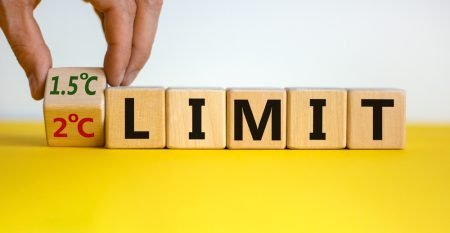
The goal of limiting warming to 1.5 °C above pre-industrial levels was set at the 2015 climate talks in Paris. This year, COP28 will mark a special occasion as it marks the conclusion of the global stocktake, an opportunity to critically assess where the world stands on climate action and to chart the course forward through increased ambition and action.
But the news is not likely to be good. The stocktake comes during the same year that the UN’s Intergovernmental Panel on Climate Change (IPCC) published its latest Synthesis Report, highlighting just how far off-track the world is in terms of meeting the Paris Agreement goals.
All eyes will be on Dubai later this year to see how leaders plan for the future.