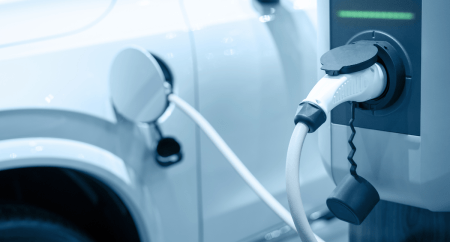
In a double breakthrough, Rice University researchers unveil two innovative methods for recycling lithium-ion batteries, promising a greener future for the booming EV industry.
The rapid growth of the electric vehicle (EV) market has brought a new environmental challenge to the forefront: the sustainable management of used lithium-ion batteries.
Addressing this issue, researchers at Rice University in Texas, US, have developed two innovative recycling methods that could significantly improve battery waste processing. These new techniques promise to enhance the speed, cleanliness, and efficiency of lithium-ion battery recycling, potentially transforming the industry’s approach to sustainability.
The microwave marvel: Extracting lithium in seconds
The first breakthrough, led by Professor Pulickel Ajayan, tackles one of the most stubborn problems in battery recycling: efficiently recovering lithium. Their novel approach uses microwave radiation and a biodegradable solvent to extract lithium from spent lithium-ion battery (LIB) cathodes with remarkable speed and efficiency.
The research comes at a critical time. The study notes: “Though relatively abundant, the silvery-white metal could soon be in short supply due to a complex sourcing landscape impacted by the electric vehicle (EV) boom, net-zero goals and geopolitical factors.”
The team’s innovative method addresses this challenge head-on. According to the research, “findings show the new process can retrieve as much as 50% of the lithium in spent LIB cathodes in as little as 30 seconds, overcoming a significant bottleneck in LIB recycling technology”.
The secret lies in using a deep eutectic solvent (DES), a choline chloride and ethylene glycol mixture. When the battery waste is submerged in this solvent and blasted with microwave radiation, the lithium is selectively leached out, leaving other metals behind. This selectivity is a game-changer, as it allows for the efficient recovery of lithium without contamination from different metals.
“Using microwave radiation for this process is akin to how a kitchen microwave heats food quickly,” explains Sohini Bhattacharyya, one of the study’s lead authors. “The energy is transferred directly to the molecules, making the reaction much faster than conventional heating methods.”
The speed of this process is impressive. While traditional methods might take 12 hours to achieve an 87% lithium recovery rate, the microwave-assisted technique accomplishes the same in just 15 minutes. This saves time and preserves the solvent’s stability, which can degrade during longer heating cycles.
Flash joule heating: A magnetic approach to battery recycling
In a parallel breakthrough, another team at Rice University, led by Professor James Tour, has developed a method that uses magnetic properties to separate and purify spent battery materials. This technique, known as solvent-free flash Joule heating (FJH), involves passing a current through battery waste to heat it to 2,500 Kelvin within seconds.
This intense heat creates unique features in the battery materials, including magnetic shells and stable core structures. The resulting magnetism, particularly in cobalt-based battery cathodes commonly used in EVs, allows for easily separating valuable materials.
“Notably, the metal impurities were significantly reduced after separation while preserving the structure and functionality of the materials,” Tour explains. “The bulk structure of battery materials remains stable and is ready to be reconstituted into new cathodes.”
This method boasts an impressive 98% recovery yield for battery metals, all while maintaining the value of the battery structure. It’s a significant step forward in addressing the environmental and economic challenges associated with battery recycling.
A greener future for battery technology
Both innovations represent significant advancements in battery recycling. They address critical issues in the current recycling landscape, including harsh chemicals, low efficiency, and high costs.
The microwave-assisted method, using biodegradable solvents and rapid processing time, offers a more environmentally friendly alternative to traditional acid-based recycling methods. Meanwhile, the flash Joule heating technique provides a way to recover a high percentage of valuable metals without destroying the battery structure, potentially allowing for more direct reuse of materials in new EV batteries.
These advancements couldn’t come at a more crucial time. The global market for lithium-ion batteries was valued at over $65 billion (£27 billion) in 2023 and is expected to grow by more than 23% in the next eight years. This growth, driven by the EV boom and increasing demand for energy storage solutions, threatens to outpace the current lithium supply.
These new methods could help close the loop in battery production by making battery recycling more efficient and cost-effective, reducing the need for new raw materials and minimizing the environmental impact of battery manufacturing.

The future of EV batteries and sustainable recycling
While these breakthroughs are promising, the researchers acknowledge that there’s still work to scale these technologies for industrial use. However, the potential impact is enormous. If successfully implemented on a large scale, these recycling methods could significantly reduce the environmental footprint of the EV and energy storage industries while also helping to secure the supply of critical battery materials.
As we move towards a future dominated by electric vehicles and renewable energy, innovations like these from Rice University will play a crucial role in ensuring that our green technologies don’t come at the cost of environmental degradation. By making battery recycling faster, cleaner, and more efficient, we’re not just solving a waste problem but paving the way for a sustainable energy future.