As the world grapples with the urgent need to address climate change, the ambition to achieve net zero emissions by mid-century has become a pivotal goal for governments, industries and environmental organisations.
Net zero refers to balancing the amount of greenhouse gases emitted with the amount removed from the atmosphere. While renewable energy, energy efficiency and electrification play significant roles in reducing emissions, one technology has gained increasing attention for its potential to help tackle emissions that are more difficult to eliminate: carbon capture, utilisation and storage (CCUS).
Understanding Carbon Capture
Carbon capture refers to the process of capturing carbon dioxide (CO₂) emissions produced from industrial activities, power generation, or even directly from the air. Once captured, this CO₂ can either be stored underground in geological formations (carbon storage) or used for various purposes (carbon utilisation), such as in the production of synthetic fuels, chemicals, or building materials.
There are three primary types of carbon capture technologies:
- Post-combustion capture: This method captures CO₂ after fossil fuels are burned to generate electricity. It is most commonly applied to power plants.
- Pre-combustion capture: This technology involves removing CO₂ from fuels before they are burned. It is typically used in industrial processes like hydrogen production.
- Direct Air Capture (DAC): Unlike the other methods, DAC captures CO₂ directly from the atmosphere, regardless of its source. This is particularly promising for achieving negative emissions, helping to reverse historical emissions that are no longer directly linked to specific activities.
Carbon Capture’s Role in Reaching Net Zero
One of the biggest challenges to reaching net-zero emissions is decarbonising hard-to-abate sectors, such as cement, steel, and heavy industry, which produce significant emissions but are difficult to electrify or transition to renewable alternatives. Carbon capture provides a viable solution for mitigating these emissions. It enables industries to continue their operations while significantly reducing their carbon footprint, offering a bridge technology as we transition toward a low-carbon economy.
Decarbonising Power Generation
The power sector remains one of the largest contributors to global CO₂ emissions. While renewable energy sources like wind and solar are crucial for decarbonising electricity generation, they cannot yet meet the world’s energy demand in all locations. Carbon capture technologies, therefore, provide a complementary solution, capturing CO₂ emissions from coal and gas plants.
Shell’s Quest Carbon Capture Project
One of the most notable projects in carbon capture is Shell’s Quest project in Canada, one of the world’s largest commercial carbon capture and storage facilities. Located in Alberta, Quest captures more than one million tonnes of CO₂ annually from Shell’s oil sands operations. The captured CO₂ is then injected deep underground into geological formations where it can be safely stored. This project showcases the ability of carbon capture technology to make significant reductions in emissions from one of the most carbon-intensive industries.
Capturing Industrial Emissions
Industries such as cement, steel, and chemicals contribute substantially to global emissions but are also hard to decarbonise due to the chemical processes involved in production. Carbon capture technology is essential in these sectors to reduce emissions without requiring major changes to established manufacturing processes.
Carbon Clean Solutions’ Innovation
Carbon Clean Solutions, a technology company focused on carbon capture, has developed innovative capture technology for industrial applications. Their technology has been deployed in numerous cement and steel plants, where it captures CO₂ from flue gases. In 2020, the company announced a partnership with one of India’s largest cement producers to implement its carbon capture technology at a large-scale plant in Gujarat, potentially capturing 60,000 tonnes of CO₂ annually. The CO₂ captured can be used in the production of synthetic fuels or stored underground, offering a way to reduce emissions while continuing industrial production.
Direct Air Capture (DAC) and Beyond
Direct Air Capture represents a groundbreaking technology with the potential to reverse the effects of historical emissions by removing CO₂ directly from the atmosphere. While the technology is still in its infancy, the potential scale of DAC is vast, especially as global carbon budgets continue to tighten.
Climeworks and CarbFix
Climeworks, a Swiss startup, is a leader in the direct air capture industry. Its Orca plant in Iceland, launched in 2021, is currently the largest DAC facility in the world, capable of capturing 4,000 tonnes of CO₂ annually. The captured CO₂ is then combined with water and pumped into volcanic rock formations through the CarbFix process, where it mineralises and becomes permanently stored underground. This approach represents a cutting-edge solution to both capturing and storing CO₂, with the potential to scale up as technology improves.
Challenges to Scaling Carbon Capture
While the potential of carbon capture technology is vast, several challenges remain in scaling it up to the level required to meet net-zero goals.
- High Costs: Carbon capture is still expensive, especially compared to other climate solutions like renewables. For instance, capturing CO₂ from a power plant can cost between $50 to $100 per tonne, and direct air capture can be even more expensive, ranging from $100 to $600 per tonne.
- Infrastructure: To store large quantities of CO₂ safely and effectively, an extensive infrastructure network of pipelines and underground storage sites is required. Developing this infrastructure will require significant investment and regulatory support.
- Public Policy and Incentives: Governments must create strong policies and financial incentives to encourage companies to invest in carbon capture. In many countries, the cost of carbon capture is still too high for companies to justify without government support. Tax credits, subsidies, and long-term regulatory frameworks are needed to accelerate its adoption.
The Future of Carbon Capture
Despite the challenges, significant progress is being made in advancing carbon capture technologies. As public and private investments continue to flow into research and development, costs are expected to decrease, and the technology will become more widespread.
NET Power Plant
The NET Power plant, located in Texas, is a first-of-its-kind power plant that integrates carbon capture with natural gas power generation. The plant uses a novel process called “Allam Cycle,” which allows for the capture of nearly all CO₂ emissions while generating electricity. The captured CO₂ is then used for enhanced oil recovery or stored underground. This project is viewed as a potential game-changer for the energy sector, as it demonstrates how carbon capture can be integrated into power plants to produce low-carbon electricity.
Carbon capture, utilisation, and storage technologies are essential to achieving net-zero emissions. They offer a powerful tool to reduce emissions in hard-to-decarbonise sectors, enabling industries like cement, steel, and power generation to continue operations while significantly lowering their carbon footprint. While challenges remain, companies like Shell, Carbon Clean Solutions, and Climeworks are showing that these technologies can make a real impact. As innovation accelerates and governments create supportive policies, carbon capture will play an increasingly vital role in the global effort to reach net-zero emissions.
The road to net zero will be complex, requiring a combination of strategies, but carbon capture is undoubtedly a critical piece of the puzzle. For businesses, policymakers, and innovators alike, the message is clear: investing in and scaling carbon capture technologies is no longer optional — it’s a necessity for a sustainable future.
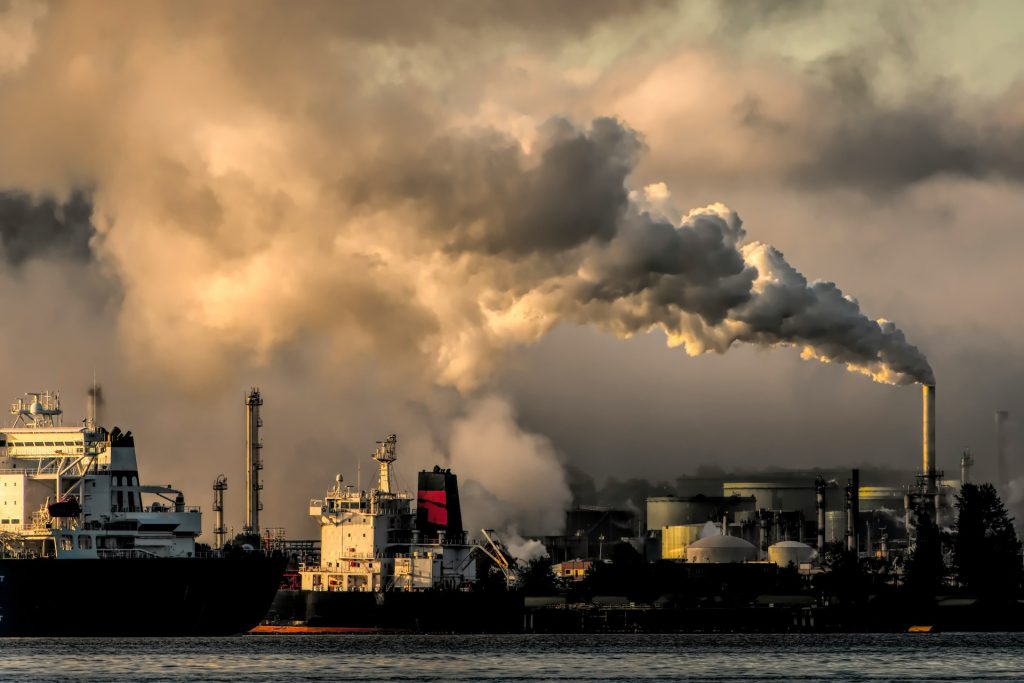
Photo by Chris LeBoutillier on Unsplash